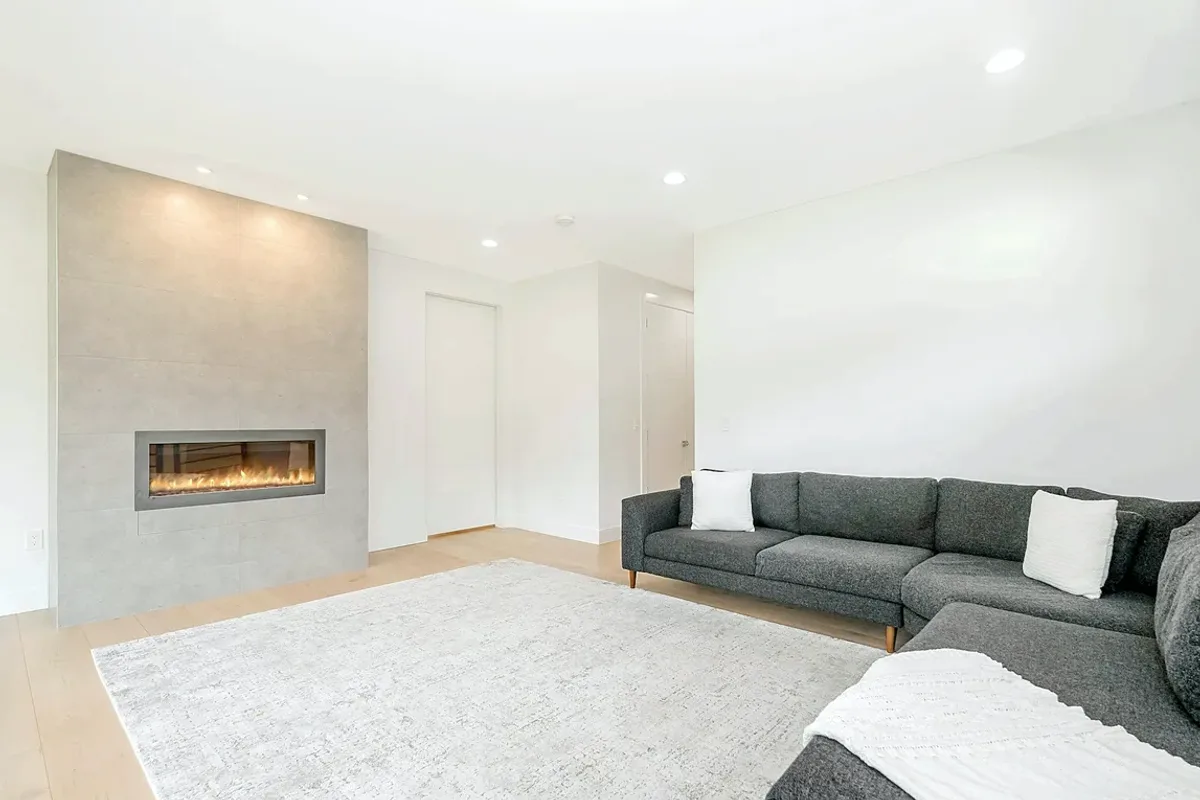
Request fireplace installation for a property in Oshawa. Include the equipment, the problem or planned work, and your location so the request can be reviewed.
What should be checked before selecting a fireplace for a new or existing opening?
A fireplace installation must suit the appliance, the room, and the route for venting or electrical service. Gas, electric, and wood-burning models have different installation requirements; gas work may involve a fuel connection and direct vent, while wood appliances may depend on a suitable chimney. Reusing an existing opening does not establish that it is compatible. The appliance model, framing, clearances, vent path, and finish plans shape the project scope before installation or replacement is chosen.
Identify whether the project is a new installation, an insert, or a replacement, and provide the candidate appliance model if known. The opening dimensions, framing, available electrical or gas service, and vent or chimney route affect suitability. These observations help determine whether the existing structure can be reused or whether additional routing and construction work changes the installation scope.
Gas, electric, and wood-burning fireplace installation
Direct vent, chimney, and existing-opening assessment
New installation, insert, replacement, and repair scope
Assessment and Scope
Questions for the Proposed Work
01
Select an appliance for the available installation
Electric, gas, and wood-burning fireplaces require different connections and clearances. A gas model may require a compatible fuel supply and direct-vent route; a wood appliance depends on an appropriate chimney and installation arrangement. Review the exact model instructions, room location, and surrounding construction before selection. An appliance that fits visually may still be unsuitable if the required vent path, service connection, or specified clearances cannot be provided.
02
Assess an existing opening and vent route
When an existing fireplace or opening is being reused, inspect its dimensions, condition, and compatibility with the new appliance. A direct-vent installation and a chimney-connected installation are not interchangeable, and vent damage or an unsuitable route can change the plan. For an insert, confirm that the appliance and venting system are approved for that configuration. Firebox, appliance, or vent damage should be described specifically rather than assumed repairable.
03
Keep installation and repair decisions separate
A new installation establishes appliance placement, connections, venting, and finishing; repair addresses a fault in an existing fireplace. If an existing unit is being replaced, compare its condition and vent arrangement with the requirements of the proposed model. Inspection findings may show that a component repair is possible or that the appliance or vent needs replacement. The decision should follow the confirmed condition and model instructions, not appearance alone.
Compare the next step
Discuss the intended attended use and manufacturer operating instructions before presenting a fireplace as part of an absence plan. Ask which functions depend on electrical supply and which controls are supported. Keep the main heating and local response arrangements explicit instead of assuming remote ignition provides safe unattended backup.
Use a qualified contractor for the chosen appliance and any fuel, venting, or electrical work. Do not alter the appliance or defeat its controls. Confirm its manufacturer operating requirements before relying on it for whole-home or outage heating.