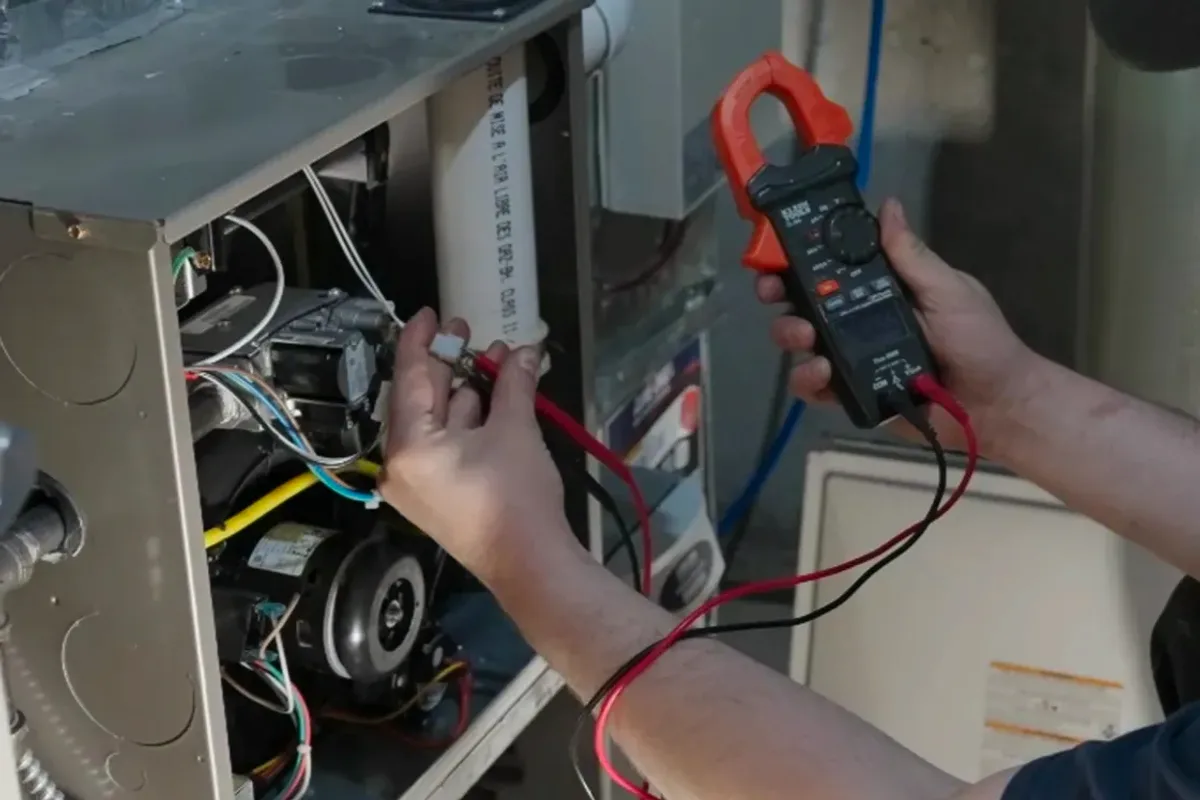
What symptoms and furnace details should I note before requesting a repair assessment?
A furnace that will not start, heats unevenly, or makes a new noise needs diagnosis based on its symptoms and equipment type. Gas and propane furnaces can differ in fuel supply and setup, while single-stage, two-stage, and modulating models use different controls. Repair may involve ignition, airflow, a blower, or a control fault; maintenance and replacement are separate decisions. Records of recent work, error indications, and when the problem occurs can help clarify the next inspection.
Note whether the furnace fails to start, stops during a cycle, or runs without warming rooms, and record any displayed fault code. The model and fuel type help identify the relevant ignition and control arrangement. A technician can compare those observations with airflow, burner, electrical, and safety-system findings before recommending a repair or discussing replacement.
Gas and propane furnace fault diagnosis
Single-stage, two-stage, and modulating furnace controls
Repair, maintenance, and replacement decisions
Assessment and Scope
Questions for the Proposed Work
01
Diagnose the failure before choosing a repair
A no-heat condition can arise from an ignition fault, a failed blower, a control problem, or restricted airflow, and those causes call for different work. The furnace model, fuel, fault indications, and sequence of operation guide testing. If a heat exchanger or another safety-critical part is damaged, the condition changes the repair decision. Do not open the furnace or handle fuel, wiring, or safety controls; provide observations for qualified assessment.
02
Separate maintenance findings from a breakdown
Maintenance checks should follow the furnace manufacturer’s instructions and the equipment’s condition. Inspection findings may identify a loaded filter, burner deposits, loose wiring, or a worn blower component, but these do not all mean the same repair is needed. A maintenance visit is not a guarantee against failure. If symptoms are present, report them rather than treating routine service as a substitute for diagnosis.
03
Compare repair with replacement using condition
A repair decision depends on the confirmed fault, the furnace’s condition, and whether suitable parts and safe operation can be established. A single failed component may support repair, while damage to a heat exchanger or repeated failures can change the comparison. Replacement planning should account for the home’s heating needs, fuel, venting, and existing duct connections, rather than relying on age or efficiency claims alone.
Compare the next step
Agree on who can respond locally if remote temperature monitoring shows a problem. Ask which alerts the installed controls provide and which conditions require on-site assessment. Keep the appliance information and access instructions available to that person; internet connectivity alone does not establish that heating remains dependable.
Leave burner, fuel, venting, electrical, and internal equipment work to a qualified contractor. Do not bypass a safety switch or repeatedly reset a furnace.